


From Kenmare to the Hill of Tara: A Journey Home Through Ireland
Guests often ask us where they should travel after leaving Kenmare. There are the familiar answers: Galway, Dingle, Cork or perhaps Dublin. But there is another journey we find ourselves recommending more and more, and for me, it is a very personal one.
It is the road from Kenmare to County Meath and the Hill of Tara.
Long before Kenmare became home, Tara was home.
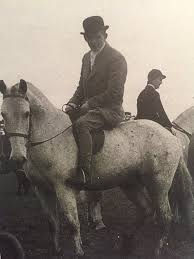
I grew up on the Hill of Tara, on land that had been in my family for generations. My grandparents, Bill and Marie Tormey, were the last private owners of the land before it was acquired by the State through compulsory purchase in 1975 and placed in the care of the Office of Public Works.
So when I recommend that guests of The Lansdowne travel north to see Tara, Newgrange and the Boyne Valley, I am not simply sending them to another collection of Irish visitor attractions. I am sending them somewhere that is part of my own story.
And the journey there can be every bit as memorable as the destination.
From the mountains of Kerry to the Rock of Cashel, from the ancient seat of the Kings of Munster to the Hill of Tara and the High Kings of Ireland, this is a wonderful road trip through some of the most extraordinary chapters of Irish history.
The Journey: Kenmare to Cashel and on to Tara
Leave Kenmare after breakfast and begin the journey north towards County Meath, but rather than thinking of this as simply a driving day, make the journey part of the experience.
Your first stop is Cashel in County Tipperary, approximately halfway between Kenmare and Tara and one of my favourite places to break the journey.
Rising dramatically above the town, the Rock of Cashel is one of Ireland’s most extraordinary historic sites. For centuries it was associated with the Kings of Munster before becoming an important ecclesiastical centre, and today its collection of medieval buildings includes a round tower, Gothic cathedral and the remarkable Cormac’s Chapel.
There is also something rather lovely about beginning this journey at the ancient seat of the Kings of Munster and ending it at Tara, the ancient ceremonial centre associated with the High Kings of Ireland.
Allow yourself time to explore the Rock before walking down into Cashel for lunch.
For food, I recommend Mikey Ryan’s Bar & Kitchen on Main Street. It is housed in a beautifully restored old Irish public house, with a gorgeous garden to the rear, and is exactly the kind of place I would choose for a leisurely lunch before getting back on the road.
From Cashel, continue north towards County Meath and the Hill of Tara.
Day 1: Tara and the Boyne Valley
Make your way towards the Hill of Tara first. It’s one of those places where the landscape is as important as the individual monuments, the ancient ceremonial centre associated with the High Kings of Ireland. The site itself is open year round and free to access, and because you are travelling now, the visitor centre and guides are operating through 30th September.
Possible accommodation:
The Station House at Kilmessan - it is a member of Blue Book historical hotels the same as The Lansdowne and is only 7 km from Tara, so you are not doing unnecessary driving. Dinner there and a relaxed evening would be lovely. Potentially you could also stay in nearby Bellinter House. We managed this property back in 2006 and it is also beautiful although I haven’t experienced in recent years.
Day 2: Newgrange, Boyne and Slane
I’d make Brú na Bóinne and Newgrange the centrepiece of the morning. This is important: do not simply drive to Newgrange. All access is through the Brú na Bóinne Visitor Centre and Newgrange/Knowth visits are guided and require advance booking. At this time of year tickets can be booked up to 30 days ahead and can sell out.
I’d allow about three hours because the main season tour includes the Visitor Centre, Knowth and entry to the chamber at Newgrange.
From there I would then visit them to Oldbridge and the Battle of the Boyne Visitor Centre. The battlefield, parkland and walled garden are worth seeing as well as the exhibition. It tells the story of the 1690 battle between William III and James II, which involved around 61,000 troops and had consequences far beyond Ireland.
Then continue towards Slane and visit the Francis Ledwidge Museum. This is the little cottage where Ledwidge was born, with his original letters, poems and memorabilia. It is currently open Tuesday to Saturday, 11am to 4pm, so they will need to watch the day and timing.
If you still have energy, I would absolutely add the Hill of Slane. It gives them another layer of the story because of the tradition that St Patrick lit the Paschal fire there in defiance of the High King at Tara.
Hill of Tara → overnight Kilmessan → Newgrange & Knowth → Oldbridge/Battle of the Boyne → Francis Ledwidge Museum → Hill of Slane → back to Kilmessan → Dublin Airport next morning.
That is a really lovely final two days in Ireland, particularly if you’re interested in Irish history and heritage. You will move from Neolithic Ireland at Newgrange, through Tara and early Christianity, then Ledwidge and the Battle of the Boyne, without spending your last days driving all over the country.
We hope you enjoy and very much look forward to welcoming you back to our home in Kenmare very soon!



Comments